Expert Livestock Management Solution
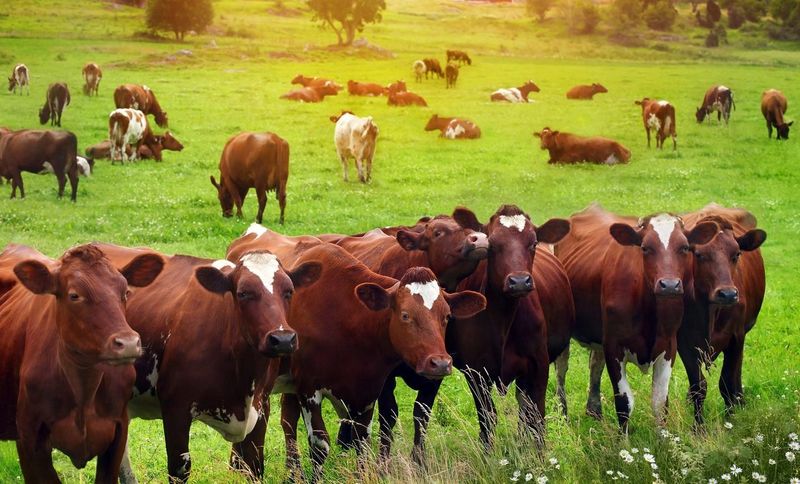
Cattle Farming
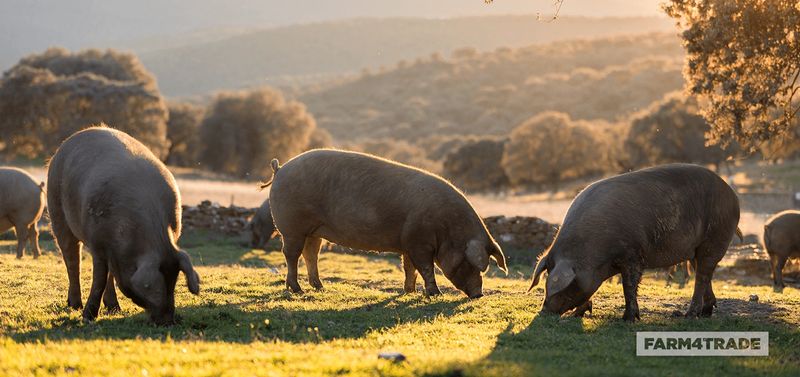
Pig Farming
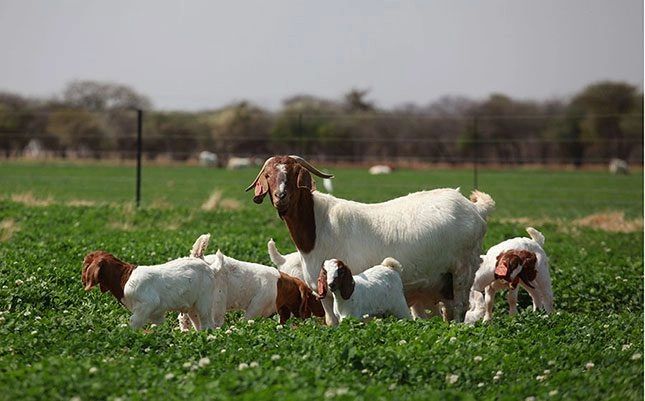
Goats & Lambs
Features of the Livestock Nutrition
Cattle Farming
- Forage-based diet (pasture, hay, silage) plus supplements (grains, minerals, protein).
- Life-stage feeding: calves (colostrum, creep feed), growing heifers, lactating cows, finishing beef, dry cows.
- Water access – clean, unlimited water (30–50 gallons/day per lactating cow).
- Minerals – salt, calcium, phosphorus, magnesium, trace minerals (copper, selenium, zinc).
- Natural service (bull-to-cow ratio ~1:20–1:30) or artificial insemination (AI).
- Estrus detection for AI timing (cycle ~21 days).
- Calving seasons – manage for favorable weather and feed availability.
- Gestation ~283 days; monitor for dystocia (calving difficulty).
- Bull fertility testing before breeding season.
Pig Farming
- Gestation (~114–116 days) – Sows housed individually (stalls) or in groups with electronic feeding stations.
- Farrowing (Birthing) – Sows moved to farrowing crates (1 week pre-partum) to prevent piglet crushing. Provide heat lamps (90–95°F for newborns).
- Lactation (~21–28 days) – Piglets nurse colostrum (critical within 6 hours of birth). Iron injection (to prevent anemia) and teeth clipping/tail docking (to reduce fighting/cannibalism – practices vary by country/standards).
- Weaning (at 3–4 weeks) – Piglets moved to nursery (80°F, slowly decreasing).
- Nursery (to ~60 lbs / 25 kg) – Small pellets, ad-libitum feeding. Vaccinations (e.g., Mycoplasma, PCV2).
- Grow-Finish (to ~250–280 lbs / 110–130 kg) – Split-sex feeding (barrows vs. gilts have different nutrient needs). Market weight reached ~5–6 months.
- Phased diets – Formulated by age/weight (e.g., starter, grower, finisher, gestation, lactation).
- Key nutrients – Corn/soybean meal base, plus lysine (first limiting amino acid), phosphorus, calcium, zinc, copper.
- Feeding methods:
- Dry (pellet or meal) – ad-libitum or restricted (gestating sows).
- Liquid feeding – common in Europe; improves feed conversion.
- Wet-dry feeders – reduce dust and waste.
- Water – 1.5–3 gallons/day for growers; 5–8 gal/day for lactating sows. Nipple drinkers or bowls.
Goats & Lambs
- Ruminants – but browsers (prefer shrubs, leaves, weeds) over grazers (sheep/cattle).
- Forage – pasture, browse (woody plants, trees), hay (legume: alfalfa/clover for milkers; grass hay for maintenance).
- Grain/concentrates – for lactating does, growing kids, or underweight animals. Limit to avoid bloat/acidosis.
- Minerals – loose goat-specific mineral (copper is needed, unlike sheep). Provide free-choice.
- Critical: copper, selenium, zinc, calcium/phosphorus.
- Water – clean, fresh, unlimited (1–3 gallons/day per adult).
- Avoid – copper toxicity in sheep (sheep mineral kills goats? No – goats need copper; sheep mineral lacks enough for goats).
- Also avoid moldy hay, rhododendron, azalea, oak (acorns in quantity).
StageDiet Focus
Kid (0–3 mo): Colostrum (first 12h), milk replacer or dam’s milk, creep feed (18% protein), hay
Growing (3–12 mo): High-quality hay + limited grain (if needed). Target 0.2–0.4 lb/day gain
Lactating doe: Free-choice legume hay + grain (1 lb per 3 lb milk), extra calcium
Dry doe/maintenance: Grass hay or lower-quality forage, mineral only
Breeding buck: Good condition – moderate grain during breeding season
Common Questions About Livestock Management Consulting
What is included in your livestock management consulting services?
Our consulting services encompass a comprehensive assessment of herd performance, tailored breeding strategies, nutrition planning, and operational efficiency improvements. We work closely with clients to develop customized solutions that align with their specific needs and goals.
How do you determine pricing for your consulting services?
Pricing for our livestock management consulting services is based on the scope of the project and the specific services required. We offer transparent pricing structures and will provide a detailed estimate after an initial consultation.
Do you guarantee results from your consulting services?
While we cannot guarantee specific results due to the inherent variability in animal husbandry, we are committed to applying our proven methodologies and expertise to deliver effective and sustainable solutions tailored to your operation.
What type of experience does your team have in livestock management?
Our team consists of certified professionals with extensive experience in livestock consulting, animal health, and agricultural economics. We pride ourselves on staying current with industry advancements and best practices.
Is there a minimum project size for your consulting services?
We work with a variety of clients, from small farms to larger operations. There is no strict minimum project size; our goal is to provide tailored assistance that meets the specific needs of your livestock management challenges.